Finding the Forever Optic for Your LWRC REPR MK I 20"
Shopping in the US? This page is on our US site: aiscopes.us →
By Peter Makulek · Senior Optics Editor · · Live prices from US retailers
Quick answer: the Nightforce ATACR 5-25×56 in MRAD with a 34mm tube is the closest thing to a true "forever optic" for the LWRC REPR MK I 20-inch barrel in 7.62×51 NATO. Its first-focal-plane Mil-XT reticle, 120 MOA of total elevation travel, and sub-quarter-mil tracking give you everything the REPR's sub-MOA barrel deserves at distances past 1,000 yards.
The LWRC REPR MK I with its 20-inch barrel is one of the most capable semi-automatic 7.62 NATO platforms sold in the US today. It ships with a monolithic upper, a full-length Picatinny rail, and a piston-driven action that can handle 175-grain match ammo all day. That means any optic you bolt on top needs to survive repeated .308-class recoil impulses, hold zero through thousands of rounds, and offer enough magnification range for shots from conversational distance out to 800 yards or beyond—distances that are absolutely realistic with quality match ammunition on open western terrain.
The phrase "forever optic" implies you buy once and never look back. For a rifle this serious, that means a first-focal-plane scope with a zero-stop turret, side-focus parallax adjustment, exposed elevation and windage knobs with repeatable tracking, and glass clarity that lets you spot coyotes at last light. It also means choosing between MOA and MRAD—a decision that shapes how you dial, communicate corrections, and read your reticle subtensions at every magnification.
This guide covers scope selection across several use cases US REPR owners actually pursue: precision long-range shooting, coyote hunting at dawn and dusk, night-vision-compatible setups, and even thermal optics for hog control. We will walk through the optics technology that matters—FFP versus SFP, MOA versus MRAD, parallax behavior, and reticle design—so you can make a confident, informed purchase from Amazon.com, OpticsPlanet, or your local dealer.
Top Picks — Live US Prices

Hawke Sport Optics Vantage Rifle Scope, 3-9x40mm, 1in, SFP, Rimfire .22 LR HV Reticle, Black, 14222
via OpticsPlanet
$175.00
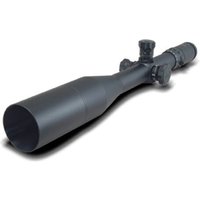
ADE Advanced Optics 6-25x56mm Long Range Rifle Scope w/ Illuminated Reticle, 35mm Tube, Glass Etched Mildot Bar Reticle, Matte, Black, 6-25X56SFIR
via OpticsPlanet
$212.79
Hawke Sport Optics Vantage Rifle Scope, 3-9x40mm, 1in, SFP, Rimfire .22 LR Subsonic Reticle, Black, 14223
via OpticsPlanet
$219.99
Buying Advice
Start with the key specifications. For the REPR MK I 20-inch, you want a scope with at least 65 MOA (roughly 19 MRAD) of elevation travel so you can dial to 1,000 yards with 175-grain SMK loads zeroed at 100 yards without running out of adjustment. A 34mm tube generally offers more internal travel than a 30mm tube. First-focal-plane reticles keep subtension values correct at every magnification—critical for ranging and holdovers—while second-focal-plane reticles hold subtensions only at one power but can offer a cleaner sight picture at low magnification. Side-focus parallax adjustable down to 25 or 10 yards eliminates aiming error at varying distances. Zero-stop turrets let you return to your 100-yard zero by feel, even in the dark.
Budget tiers look like this in 2026. Entry-level long-range scopes in the $400–$700 range—think Vortex Diamondback Tactical or Bushnell Match Pro—offer surprisingly good glass and reliable tracking, but may lack premium coatings, true zero-stop mechanisms, or ultra-bright reticle illumination. Mid-tier options between $800 and $1,800 include the Leupold Mark 5HD 5-25×56, Vortex Viper PST Gen II 5-25×50, and Bushnell XRS3—each delivering excellent repeatability, HD glass, and solid warranties. Premium scopes above $2,000, like the Nightforce ATACR 5-25×56, Zeiss LRP S5 5-25×56, and Nightforce NX8 2.5-20×50, represent the endgame: flawless tracking, elite edge-to-edge resolution, and bombproof construction worthy of a "forever" label.
Common mistakes REPR owners make when choosing glass: first, buying too much magnification. A 5-25× scope is the sweet spot for this platform; going to 8-32× costs field of view at the low end and buys magnification you will almost never use on a semi-auto .308. Second, ignoring recoil ratings—the REPR's short-stroke piston generates sharp, consistent recoil, and budget scopes rated only for rimfire or spring-piston air rifles will lose zero quickly. Third, mounting errors: the REPR's 20 MOA rail is optional, and if you add one, your scope's zero-stop and turret range shift accordingly. Always confirm whether your rail has a built-in cant before dialing your scope. Fourth, overlooking weight—a 34mm 5-25× scope plus a quality mount can add 36–40 ounces to an already 9.3-pound rifle.
US-specific context matters. Most long-range .308 match ammo—Federal Gold Medal 175-grain, Hornady ELD Match 168-grain, Berger 175-grain OTM—is widely available at retailers like Brownells, MidwayUSA, and even Walmart in many states. If coyote hunting is your primary mission, consider that most predator shots in the plains states and Southwest happen between 100 and 400 yards; an illuminated FFP reticle with a bright red or green center dot is invaluable at dawn and dusk. For night hunting where legal—Texas, Oklahoma, and several other states permit it—a clip-on night-vision device like the Pulsar Forward DFA75 paired with a conventional day scope, or a dedicated thermal rifle scope from Pulsar or HikMicro, turns the REPR into a devastating hog-control platform. Check your state's regulations before purchasing any night-vision or thermal scope for hunting use.
Matching the optic to your use case is the final step. For a pure precision or PRS-style rig, prioritize an MRAD FFP scope with a Christmas-tree reticle, exposed turrets, zero stop, and at least 10× on the top end—a Nightforce ATACR or Zeiss LRP S5 excels here. For a do-everything hunting and range rifle, a Leupold Mark 5HD or Vortex Viper PST Gen II in MOA gives you intuitive adjustments if you think in inches at 100 yards. For dedicated night work, a thermal scope like the Pulsar Thermion 2 XP50 Pro eliminates the need for ambient light entirely—ideal for Texas hog hunting from a blind at 200 yards. For air-rifle shooters considering a similar optic philosophy, remember that sub-12 ft-lb springers are only effective to about 50–75 yards, so a 3-12× SFP scope with AO parallax is far more appropriate than a heavy long-range FFP unit.
The brand landscape in 2026 is healthy for US buyers. Nightforce (made in Orofino, Idaho) remains the gold standard for duty-grade precision optics. Vortex offers outstanding warranty support from Barneveld, Wisconsin, and dominates the mid-tier. Leupold, based in Beaverton, Oregon, continues to refine the Mark 5HD line with American-assembled quality. Zeiss, Bushnell, and Weaver each fill specific niches—Zeiss for European-grade glass clarity, Bushnell for value-conscious precision, and Weaver for classic simplicity. In the thermal and night-vision space, Pulsar and HikMicro lead with aggressive pricing and rapid feature iteration. All of these brands are available through Amazon.com with the aiscopeus-20 tag, and many are stocked at OpticsPlanet with frequent coupon promotions.
Frequently Asked Questions
What magnification range is best for the LWRC REPR MK I 20-inch barrel?
A 5-25× scope is the ideal range for this platform. The low 5× end provides enough field of view for rapid target acquisition inside 200 yards, while 25× gives you the resolution to read wind mirage and spot hits at 800–1,000 yards. Going higher than 25× on a semi-auto .308 rarely adds practical value and costs you weight and field of view.
Should I choose FFP or SFP for a long-range scope on the REPR?
First-focal-plane is the stronger choice for a precision or mixed-use REPR build. FFP reticles maintain accurate subtensions at every magnification, so your holdover and wind-hold values work whether you are dialed to 8× or 25×. SFP can work if you only plan to dial turrets and keep the reticle on one fixed power, but FFP offers far more flexibility in dynamic shooting scenarios.
MOA or MRAD—which system is better for a .308 rifle scope?
Neither is inherently superior; what matters is consistency across your entire system. MRAD (mil) is the more common choice in PRS and tactical communities because the math for range estimation and corrections is simpler in base-10 increments (0.1 mil equals 1 cm at 100 meters, or roughly 0.36 inches at 100 yards). MOA is intuitive for shooters who think in inches, since 1 MOA equals approximately 1.047 inches at 100 yards. Pick one and stick with it for turrets, reticle, and ballistic solver.
Can I use a clip-on night-vision device with a day scope on the REPR?
Yes, and this is one of the most popular setups for nighttime coyote and hog hunting. A clip-on unit like the Pulsar Forward DFA75 mounts in front of your existing day scope, preserving your zero and reticle. Make sure your day scope's objective bell has enough clearance and that the combined weight does not exceed what your mount and rail can handle. Always verify that night-vision hunting is legal in your state before purchasing.
Is a thermal scope worth it for hog hunting with the REPR?
For dedicated nighttime hog control—especially in states like Texas, Oklahoma, and Georgia where it is legal—a thermal rifle scope is a game-changer. Models from Pulsar (Thermion 2 series) and HikMicro detect body heat through total darkness, fog, and light brush. The downside is cost (premium thermals start above $3,000) and the fact that thermal scopes are single-purpose; you cannot use them as a conventional daytime precision optic. Many REPR owners keep a thermal on a quick-detach mount as a secondary upper or swap optic.
How much elevation travel do I need for 1,000-yard shooting with 7.62 NATO?
With a 100-yard zero and 175-grain match .308 ammunition, you need roughly 36–38 MOA (about 10.5 MRAD) of come-up to reach 1,000 yards at sea level. A scope with at least 65 MOA or 19 MRAD of total elevation travel gives you comfortable margin. Adding a 20 MOA canted rail to the REPR's Picatinny top effectively shifts your mechanical range upward, giving you even more room for extreme-distance work.
What parallax setting should I look for on a REPR scope?
A side-focus parallax knob adjustable from 10 or 25 yards down to infinity is standard on quality long-range scopes and is essential for the REPR. Parallax error causes the reticle to shift relative to the target when your eye moves off-center; at 25× magnification this can easily shift your point of impact by an inch or more at 300 yards. Always adjust parallax until the target image is sharpest and the reticle shows zero shift when you move your head slightly behind the eyepiece.
Will a budget scope survive recoil on the REPR MK I?
The REPR's piston-driven 7.62 NATO action produces brisk recoil—not punishing by magnum standards, but enough to destroy optics not rated for centerfire semi-auto use. Budget scopes designed for rimfire or low-power air rifles will likely lose zero or suffer internal damage within a few hundred rounds. Stick with scopes explicitly rated for .308-class recoil and backed by a no-questions warranty—Vortex's VIP Lifetime Warranty and Leupold's Lifetime Guarantee are two of the strongest in the US market.
What mount or ring height do I need for the REPR's Picatinny rail?
The REPR's flat-top rail sits at standard AR-10 height. For a 56mm objective lens, you will typically need high or extra-high rings (1.30–1.45 inches center height for 34mm tubes) to prevent the objective bell from contacting the rail or handguard. A quality one-piece cantilever mount from brands like Badger Ordnance, Scalarworks, or Nightforce provides maximum rigidity and consistent return-to-zero if you ever remove the scope. Always check clearance with a dollar bill between the bell and the rail before final torque.
Related guides
Find the best scope for your Ruger 10/22 Carbon in 2026. We cover rimfire optics, FFP vs SFP, parallax, and top picks for squirrel hunting, benchrest…
Rifle vs. Scope: Where to Put Your Money for Long RangeLearn exactly how to divide a $1,000–$1,500 budget between your rifle and scope for long-range shooting.
Base Class Optic Rules & MSRP Cap Conflicts: What to BuyConfused by PRS base-class MSRP caps and optic eligibility? Our 2026 US guide breaks down compliant scopes, FFP vs SFP rules…
5-25x Rifle Scopes Under $600 — What to BuyLooking for a 5-25x scope under $600? Our 2026 guide covers the best budget long-range optics, FFP vs SFP, MOA vs MRAD, and top picks for US shooters.
Optic & Muzzle Brake Options: The Definitive GuideHow to pair the best rifle scope with the right muzzle brake or suppressor for long range, coyote hunting, and more.
How to Spot Fake Scopes on eBay & Protect Your InvestmentLearn how to identify counterfeit rifle scopes, thermal optics, and night vision devices sold on eBay.
Not sure which scope is right for you?
Try our AI-powered scope finder — answer a few questions and get personalised recommendations.
Find My Scope →Get a UK scope tip every day
Follow AiScopes on Facebook for daily buying guides, deals and gear advice.
Follow on Facebook