5-25x Rifle Scopes Under $600 — What to Buy
Shopping in the US? This page is on our US site: aiscopes.us →
By Peter Makulek · Senior Optics Editor · · Live prices from US retailers
Quick answer: at the $600 price point, the Vortex Diamondback Tactical 6-24x50 FFP and the Bushnell Match Pro 6-24x50 are the two most consistently recommended optics for US shooters who need a 5x-to-25x-class magnification range without spending four figures. Both deliver exposed turrets with reliable tracking, first focal plane reticles, and side-focus parallax — the essentials for shooting steel beyond 500 yards.
The 5-25x magnification range has become the gold standard for long-range shooting disciplines in the US, from Precision Rifle Series (PRS) competition to western coyote hunting across open desert and plains terrain. A $600 budget puts you in a fascinating tier: above the entry-level scopes that compromise on glass clarity and turret reliability, but below premium names like Nightforce and March. The good news is that optics in this bracket have improved dramatically over the past few years, with better coatings, more precise erector assemblies, and tighter quality control than we saw even three years ago.
Why does 5-25x matter? At 5x, you retain enough field of view to acquire targets at moderate distances — critical for coyote hunters scanning brushy draws at 100 yards or PRS shooters transitioning between barricade stages. At 25x, you can resolve small steel targets and read mirage at 800 to 1,000 yards. That versatility explains why this magnification range dominates long-range rifle builds in calibers like 6.5 Creedmoor, .308 Winchester, and the increasingly popular 6mm ARC.
This guide covers the key decision factors — FFP versus SFP, MOA versus MRAD, glass quality, turret feel, and reticle design — so you can confidently choose a scope that fits your rifle, your discipline, and your budget. Every recommendation is geared toward the US market, with purchasing options available through Amazon.com and major US optics retailers.
Top Picks — Live US Prices

Hawke Sport Optics Vantage Rifle Scope, 3-9x40mm, 1in, SFP, Rimfire .22 LR HV Reticle, Black, 14222
via OpticsPlanet
$175.00
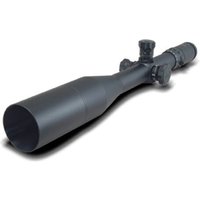
ADE Advanced Optics 6-25x56mm Long Range Rifle Scope w/ Illuminated Reticle, 35mm Tube, Glass Etched Mildot Bar Reticle, Matte, Black, 6-25X56SFIR
via OpticsPlanet
$212.79
Hawke Sport Optics Vantage Rifle Scope, 3-9x40mm, 1in, SFP, Rimfire .22 LR Subsonic Reticle, Black, 14223
via OpticsPlanet
$219.99
Buying Advice
Start with the specs that actually matter at this price. First focal plane (FFP) scopes keep the reticle scaled to the target at every magnification, so your mil or MOA holdovers are accurate whether you are dialed to 8x or 25x — essential for PRS and practical long-range shooting. Second focal plane (SFP) scopes only read true at one magnification (usually max), but they can offer a finer reticle at low power, which some hunters prefer. At $600, FFP models dominate the market, and for a 5-25x-class scope intended for distance work, FFP is the stronger choice. Look for a 30mm tube (34mm is rare under $600), a 50mm objective for light gathering, and side-focus parallax adjustable down to at least 25 yards. Zero-stop turrets — which prevent you from dialing below your confirmed zero — are a major convenience feature; some budget scopes include it, others do not.
Think of the sub-$600 long-range optics market in three tiers. Entry tier ($200–$350) includes scopes like the Athlon Argos BTR Gen II and some Bushnell Banner models — functional glass, but turret tracking can be inconsistent and coatings are merely adequate. Mid tier ($350–$600) is where serious value lives: Vortex Diamondback Tactical, Bushnell Match Pro, Athlon Ares ETR (when on sale), and the Primary Arms SLx and GLx lines. You get noticeably better edge-to-edge clarity, more repeatable turret clicks, and features like locking turrets or zero stops. Premium tier ($600–$1,200) brings names like Vortex Viper PST Gen II, Leupold Mark 5HD in certain configurations, and occasionally Nightforce SHV models — significantly better low-light transmission and mechanical precision, but above our stated budget.
The most common mistake buyers make at the $600 level is chasing maximum magnification instead of glass quality. A scope labeled 5-30x that costs $400 almost certainly compromises on coating quality, edge sharpness, and chromatic aberration. You are better served by a well-made 6-24x50 with excellent coatings than by a mediocre 5-30x56 with soft edges and purple fringing. Another frequent error is ignoring eye relief: scopes with less than 3.5 inches of eye relief can punish you under recoil from .308 or magnum calibers. Also, do not skip the lapping and leveling process — a perfectly tracked turret means nothing if your scope is canted in its rings.
For US-specific context, consider your primary use case. Western coyote hunters glassing sage flats in Wyoming, Nevada, or Montana benefit enormously from a 5-25x-class scope because engagements can stretch beyond 400 yards in open terrain. PRS and NRL competitors need reliable, repeatable turret tracking and an FFP MRAD reticle for rapid corrections. Whitetail hunters in eastern hardwood states rarely need more than 12x, but a 5-25x scope on a dedicated long-range or varmint rig makes sense as a second rifle setup. If you also shoot rimfire or air rifle at closer distances, be aware that most 5-25x scopes have a minimum parallax setting of 10 to 25 yards — they are not designed for sub-12 ft-lb air rifles, which are generally effective to only 50–75 yards and pair better with dedicated short-range optics. Purchase through Amazon.com for fast shipping and easy returns, or check OpticsPlanet for bundle deals that include rings and a throw lever.
Matching scope to use case means being honest about your shooting distances. If you never shoot past 600 yards, a 4-16x or 6-24x scope may serve you just as well as a 5-25x, sometimes with a lighter weight and shorter overall length. However, if you are building a dedicated long-range rig — say a Bergara B-14 HMR in 6.5 Creedmoor or a Ruger Precision Rifle in .308 — the 5-25x magnification range gives you room to grow without buying a second scope. For MOA versus MRAD, the rule is simple: MRAD (mil) is the standard in competitive shooting circles and pairs naturally with metric-based ballistic calculators, while MOA offers finer adjustment increments (1/4 MOA clicks equal roughly 0.26 inches at 100 yards) and is familiar to hunters who think in inches of drop. Neither is objectively better; choose the system you will actually practice with.
The brand landscape at this price is dominated by a few proven names. Vortex leads in market share thanks to its unconditional lifetime warranty and the Diamondback Tactical line. Bushnell has surged back with the Match Pro, which competes head-to-head with scopes costing $200 more. Athlon offers the Ares and Midas lines with strong specs-per-dollar but smaller US service infrastructure. Primary Arms brings innovative reticle designs like the ACSS, which build ballistic data directly into the reticle. Leupold remains a premium US-made option — their VX-3HD and Mark 3HD lines occasionally dip into the $500s on sale but are typically SFP designs geared toward hunters. Zeiss and Nightforce sit above this budget for their long-range models, but are worth saving for if you demand elite glass and bombproof mechanics.
Frequently Asked Questions
Is FFP or SFP better for a 5-25x scope under $600?
For long-range shooting and PRS-style competition, FFP is the better choice because your reticle subtensions remain accurate at every magnification level. This means you can hold over or range targets without dialing to a specific power setting first. SFP can work well for hunters who primarily shoot at max magnification, but at the $600 price point, the market overwhelmingly favors FFP designs for 5-25x-class scopes.
Should I choose MOA or MRAD for a budget long-range scope?
MRAD (mil) is the dominant system in competitive long-range shooting and pairs well with ballistic apps that output corrections in mils. MOA offers finer click values — 1/4 MOA is about 0.26 inches at 100 yards versus 0.1 MRAD equaling 0.36 inches at the same distance (or precisely 1 cm at 100 meters). If you are new to long range, MRAD is slightly easier to learn because the math is base-10. Pick one system and commit to it.
Can I use a 5-25x scope on an air rifle?
A 5-25x scope is generally overkill for a sub-12 ft-lb air rifle, which is realistically effective to only about 50–75 yards. These scopes also tend to have minimum parallax settings of 10–25 yards, making them less precise at typical airgun distances. Additionally, spring-piston air rifles produce a unique double-recoil impulse that can damage scopes not rated for it. You are better served by a dedicated air rifle scope in the 3-12x or 4-16x range.
What is parallax adjustment and why does it matter at long range?
Parallax is the apparent shift of the reticle against the target when you move your eye behind the scope. At long range, uncorrected parallax introduces aiming error. Side-focus parallax knobs let you dial out this error for a specific distance. Most 5-25x scopes adjust from about 10–25 yards to infinity. For shooting at 600+ yards, you will frequently adjust parallax, so a smooth, well-marked knob is genuinely important.
Do I need a zero stop on a $600 scope?
A zero stop is not strictly necessary, but it is extremely helpful. It prevents you from dialing your elevation turret below your confirmed zero, so after engaging a distant target you can quickly return to zero without counting clicks or looking at the turret markings. Some sub-$600 scopes include it — the Bushnell Match Pro, for example — while others do not. If you plan to dial elevation frequently, prioritize a scope with a reliable zero stop.
Is a 5-25x scope practical for coyote hunting?
Absolutely. Coyote hunting in open western terrain often involves shots from 200 to 500+ yards, and 5x on the low end gives you enough field of view to scan for movement. At 25x, you can positively identify and precisely aim at a coyote-sized target at extended distance. Pair the scope with a flat-shooting cartridge like .22-250, .204 Ruger, or 6.5 Creedmoor on a stable rest, and you have a highly effective predator setup.
Can a $600 rifle scope be used at night or with night vision?
A conventional $600 rifle scope is a daytime/low-light optic — it does not provide night vision capability. For actual night hunting (legal in many US states for predators and hogs), you need a dedicated night vision scope, a clip-on night vision device mounted ahead of your day scope, or a thermal scope. Brands like Pulsar and Hikmicro offer thermal and digital night vision units, but dedicated thermal scopes typically start well above $1,000. A budget option is a clip-on night vision monocular paired with your day scope.
What rings or mount do I need for a 5-25x scope?
Most budget 5-25x scopes use a 30mm main tube, so you need 30mm rings or a one-piece 30mm cantilever mount. For bolt-action rifles, a set of medium-height Vortex Pro or Burris Signature Zee rings is a reliable choice. For AR-platform rifles, a one-piece cantilever mount provides proper eye relief and forward positioning. Make sure ring height clears your objective bell — with a 50mm objective, medium rings work on most bolt actions, but you may need high rings on an AR-15 flat-top rail.
How does a $600 scope compare to a $1,200 scope in real-world use?
The biggest differences are glass clarity in low light, edge-to-edge sharpness, chromatic aberration control, and turret repeatability over many revolutions. A $600 scope might track perfectly for 15–20 mils of elevation but show slight deviation beyond that, while a $1,200 Vortex Viper PST Gen II or Nightforce SHV holds tighter tolerances across the full adjustment range. For most shooters engaging targets under 1,000 yards, a well-chosen $600 scope performs admirably — the premium gap mainly shows at extreme distance or in fading-light hunting scenarios.
Related guides
Choosing the best long-range scope for the LWRC REPR MK I 20" in 7.62 NATO? Our 2026 guide covers FFP vs SFP, night vision, thermal…
Rifle vs. Scope: Where to Put Your Money for Long RangeLearn exactly how to divide a $1,000–$1,500 budget between your rifle and scope for long-range shooting.
Optic & Muzzle Brake Options: The Definitive GuideHow to pair the best rifle scope with the right muzzle brake or suppressor for long range, coyote hunting, and more.
Not sure which scope is right for you?
Try our AI-powered scope finder — answer a few questions and get personalised recommendations.
Find My Scope →Get a UK scope tip every day
Follow AiScopes on Facebook for daily buying guides, deals and gear advice.
Follow on Facebook