Best Thermal Scopes Under $1000 for 2026
Shopping in the US? This page is on our US site: aiscopes.us →
By Peter Makulek · Senior Optics Editor · · Live prices from US retailers
Thermal imaging has gone from a military luxury to a genuine option for civilian hunters and property defenders, and 2026 is the first year you can realistically get a weapon-rated thermal scope for under $1000 that actually performs. Whether you are calling coyotes in West Texas, running hogs off crops in Georgia, or protecting livestock in Montana, a thermal optic lets you detect, identify, and ethically harvest game in total darkness, fog, or dense brush where a conventional rifle scope is useless. The sub-$1000 bracket has exploded with credible options, making it the most competitive price tier in the thermal market right now.
The challenge is that thermal technology is spec-dense, and manufacturers at this price point make real trade-offs. Sensor resolution, refresh rate, detection range, reticle options, and recoil rating all vary dramatically between a $400 unit and a $950 unit. Understanding what those numbers actually mean for a shot on a 40-pound coyote at 200 yards versus a 250-pound boar at 80 yards is critical before you commit. This guide breaks down every decision factor so you buy the right scope the first time instead of upgrading six months later.
For US hunters specifically, thermal scopes occupy a unique legal and practical niche. Most states now permit thermal optics for predator and hog hunting, and a growing number allow them for furbearers and even some big-game seasons. However, regulations vary by state and species, so always verify your state's game commission rules before heading afield. On the practical side, the vast majority of thermal-scope shots in the US happen inside 250 yards — and the sub-$1000 tier is well-suited to that envelope when matched to common platforms like bolt-action .223 Remington, AR-15 rifles in 5.56 or 6.5 Grendel, and AR-10 builds in .308 Winchester.
Below, we walk through the key specifications, highlight the models earning the strongest user feedback in 2026, explain budget tiers and common mistakes, and answer real questions from hunters shopping this exact category. If you have been searching for the best thermal scope that does not require a second mortgage, you are in the right place.
Top Picks — Live US Prices
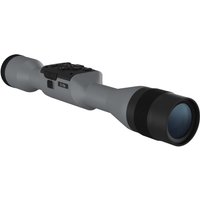
ATN OPMOD ATN X-Sight 5, 3-15x, UHD Smart Day/Night Hunting Rifle Scope in Wolf Grey
via OpticsPlanet
$465.49

OPMOD ATN OPMOD X-Sight 5 3-15x, 4K+ UHD Smart Day/Night Hunting Riflescope in Wolf Grey, Wolf Grey, DGWSXS3155OPWG
via OpticsPlanet
$465.49

ATN X-Sight 5 3-15x UHD Smart Day/Night Hunting Rifle Scope, 30mm Tube w/ Gen 5 Sensor, Multiple Patterns & Color Options Reticle, Black, DGWSXS3155P
via OpticsPlanet
$599.00
Buying Advice
The single most important spec on any thermal scope is sensor resolution, expressed as pixel dimensions like 384×288 or 256×192. Higher resolution means more pixels painting the scene, which translates directly into your ability to distinguish a coyote from a fence post at distance. At the sub-$1000 level, 384×288 is the sweet spot — it gives you a usable image for positive identification out to roughly 200–300 yards depending on conditions. Units with 256×192 sensors can still work for close-range hog hunting inside 150 yards, but you will notice a grainier image and shorter effective ID range. Refresh rate matters too: a 50 Hz display updates smoothly enough for tracking a moving animal, while cheaper 25 Hz units can feel laggy when panning. NETD (Noise Equivalent Temperature Difference) tells you how sensitive the sensor is to small temperature changes — look for 35 mK or lower for cleaner images in cool weather when the contrast between an animal and the ground shrinks.
Budget tiers in the thermal scope world break down clearly. Below $500, you are in spotter or monocular territory — units like entry-level handhelds that are not recoil-rated and should never be mounted on a rifle. The $500–$750 band is where true weapon-grade thermal scopes begin, typically with 256×192 sensors, basic reticle options, and detection ranges around 800–1,200 yards (remember, detection range is not identification range — you may detect heat at 1,000 yards but only positively ID the animal at 250). From $750 to $1,000, you start seeing 384×288 sensors, multiple color palettes, built-in video recording, Wi-Fi streaming, and more refined zero systems. This upper bracket represents the best value for a hunter who wants a primary optic rather than a novelty.
Common mistakes in this category cost hunters real money. First, confusing detection range with identification range: a scope may detect a human-sized heat signature at 1,500 yards, but that same scope might only let you tell a coyote from a dog at 200 yards. Always look at the identification or recognition specification, not the headline detection number. Second, ignoring recoil rating — mounting a non-weapon-rated thermal monocular on a .308 bolt gun will destroy the sensor or crack the housing within a few shots. Third, buying a scope with no zero-adjustment mechanism or with clicks so coarse you cannot hold a usable group. Entry-level thermals sometimes offer only 2 MOA per click, which makes precise zeroing frustrating. Fourth, overlooking battery life: a scope rated for three hours of continuous use will die mid-hunt on a cold January night in the Dakotas, because lithium-ion capacity drops in low temperatures.
For US buyers, the most common thermal-scope platforms are predator and hog rigs. A flat-top AR-15 in .223 Remington or .224 Valkyrie with a Picatinny rail is the most popular host, because recoil is mild enough that even budget thermal scopes survive. Bolt-action rifles in .22-250 or .243 Winchester are also excellent choices for longer-range coyote work. If you are considering a thermal clip-on instead of a dedicated scope — a unit that mounts in front of your existing daytime optic — be aware that quality clip-ons from brands like Pulsar or iRay typically start above $1,500 and add significant weight forward of the action. At the sub-$1000 level, a dedicated thermal scope is almost always the better value. For purchasing, Amazon.com carries many of the leading thermal brands with Prime shipping and straightforward returns, and OpticsPlanet is another reliable US retailer that frequently bundles thermal scopes with mounts or accessories.
Matching a thermal scope to your use case requires honest self-assessment. If you are a weekend coyote caller who hunts open ranch country, prioritize sensor resolution and magnification range — a 384-sensor scope with 2–8× zoom and a good ballistic reticle will serve you well out to 250 yards. If you are a hog hunter working thick East Texas brush at 50–120 yards, a compact 256-sensor unit with a wide field of view and fast target acquisition may be the smarter buy, and you can pocket the savings. For property defense against predators threatening livestock, look for models with picture-in-picture zoom and video recording so you can document depredation events. And if you plan to use the scope across multiple rifles, confirm that the mount system is compatible with standard Picatinny or Weaver-style rails — most thermal scopes ship with a 30 mm or proprietary mount, so verify fitment before ordering.
The brand landscape under $1000 is dominated by a handful of manufacturers. AGM Global Vision, Pulsar (at the top end of the bracket), iRay, and Bering Optics are the names you will encounter most often. Traditional rifle-scope powerhouses like Vortex, Leupold, Nightforce, and Swarovski all make thermal or digital night-vision products, but their thermal weapon sights generally sit well above the $1000 mark — their expertise shines more in premium glass and conventional rifle scopes. Burris and Hawke have explored digital night-vision territory but have not yet released sub-$1000 dedicated thermal scopes. When shopping this bracket, prioritize the thermal-specialist brands and look for solid warranty terms, US-based service centers, and firmware-update support, because thermal technology evolves fast and a manufacturer that pushes updates can materially improve your scope after purchase.
Frequently Asked Questions
What is the best thermal scope under $1000 for coyote hunting?
For coyote hunting specifically, look for a thermal scope with a 384×288 or higher resolution sensor, at least 2× base magnification, and a 50 Hz refresh rate so you can track a moving dog smoothly. Models in the $750–$1000 range from AGM, iRay, and Bering Optics hit these specs reliably. Most coyotes are called inside 200 yards, so the identification range of a good 384-sensor scope is well-matched to the discipline.
Can I get a usable thermal scope for coyote hunting under $500?
Dedicated weapon-rated thermal scopes under $500 do exist, but they typically use 256×192 sensors with limited magnification, which shortens your effective identification range to roughly 100–150 yards. For close-range hog work or very short calling setups, that can be adequate. However, if you regularly call coyotes at 150–250 yards, saving up for the $700–$1000 tier will give you a meaningfully better image and longer positive-ID capability.
Is a thermal clip-on better than a dedicated thermal scope?
Clip-on thermal devices mount ahead of your existing daytime scope and let you keep your familiar reticle and zero, which is a genuine advantage. However, quality clip-ons that handle recoil and maintain zero generally start above $1,500, putting them outside this guide's budget. At the sub-$1000 level, a dedicated thermal scope is almost always the superior choice in terms of image quality, weight distribution, and overall value.
Are thermal scopes legal for hunting in all 50 states?
No. While most US states now permit thermal optics for predator hunting (coyotes, feral hogs, furbearers), regulations vary significantly by state and sometimes by species or season. A handful of states restrict electronic sighting devices during certain big-game seasons. Always consult your state's fish and wildlife agency website for current rules before using a thermal scope afield. Night-hunting permissions, where required, are a separate consideration from the optic itself.
What is the difference between detection range and identification range on a thermal scope?
Detection range is the maximum distance at which the scope's sensor can register a heat signature of a specified size — typically a human-sized target or a 1.7-meter-tall object. Identification range is the distance at which you can actually determine what the heat source is — distinguishing a coyote from a raccoon, for example. Identification range is almost always one-quarter to one-third of the stated detection range. For ethical hunting, identification range is the number that matters most.
What magnification should I choose for a thermal scope?
Most sub-$1000 thermal scopes offer a base optical magnification of 1× to 3× combined with digital zoom up to 8× or more. Digital zoom enlarges the image but does not add resolution, so heavily zoomed images become pixelated. For predator calling inside 250 yards, a 2–3× base magnification with 2–4× digital zoom is the practical sweet spot. If you hunt in thick cover at close range, a 1× base with a wide field of view lets you acquire targets faster.
Do I need special mounts or rings for a thermal scope?
Most thermal scopes use a proprietary mount or a 30 mm ring-mount system and attach to a standard Picatinny or Weaver rail. Many ship with a compatible mount in the box. Before ordering, confirm that your rifle has a full-length Picatinny top rail — AR-15-platform rifles almost always do, and most modern bolt-action hunting rifles accept aftermarket Picatinny bases. Avoid using scope rings or mounts designed for lightweight spotting scopes, as they may not survive recoil.
How does a thermal scope compare to a digital night-vision scope?
Digital night-vision scopes amplify ambient light (moonlight, starlight, or an IR illuminator) and produce a green, black-and-white, or color image. They are far cheaper — many fall under $300 — but they rely on some light source and cannot see through fog, dust, or brush the way thermal can. Thermal scopes detect heat radiation directly, so they work in total darkness with no illuminator and excel at picking up animals against complex backgrounds. For serious predator or hog hunting, thermal is the more capable technology.
Where should I buy a thermal scope in the US?
Amazon.com is the most convenient option for many buyers, offering fast shipping, easy returns, and competitive pricing on major thermal brands. OpticsPlanet is another reputable US retailer with a wide thermal-optic selection and frequent bundle deals. Some manufacturers also sell direct through their own US websites. Whichever retailer you choose, verify that the unit includes a US warranty and confirm the seller is an authorized dealer to avoid gray-market imports with limited support.
Related guides
Not sure which scope is right for you?
Try our AI-powered scope finder — answer a few questions and get personalised recommendations.
Find My Scope →Get a UK scope tip every day
Follow AiScopes on Facebook for daily buying guides, deals and gear advice.
Follow on Facebook