Trijicon ACOG Buyer's Guide: Which Model, and Is an RMR Combo Worth It?
Shopping in the US? This page is on our US site: aiscopes.us →
By Peter Makulek · Senior Optics Editor · · Live prices from US retailers
The Trijicon ACOG (Advanced Combat Optical Gunsight) has been in continuous US military and law enforcement service for decades, and that heritage is exactly why it remains a benchmark choice for AR-15 owners who want a genuinely rugged, battery-free optic rather than the latest electronic sight. Unlike almost every other magnified optic on the market, an ACOG's primary illumination comes from a fiber-optic strip that gathers ambient light plus a self-luminous tritium source for low light — meaning the reticle stays lit with zero battery to fail, charge or forget, at the cost of not being adjustable to full darkness the way an LED reticle is.
That mechanical, no-battery design is the whole point of an ACOG, and it shapes which model actually fits a given AR-15. The lineup spans from the TA01 series (fixed 4x32, no illumination beyond the reticle's fiber-optic/tritium combination) through the TA31 series (4x32 with a BDC reticle calibrated for 5.56/.223) up to combo models that pair an ACOG with a Trijicon RMR reflex sight mounted forward on the top rail for close-range, both-eyes-open engagement without giving up the ACOG's 4x magnification for a longer shot.
This guide covers current US pricing across the range, what the RMR combo actually adds over a standalone ACOG, and which model fits which use case — a duty or home-defense AR-15, a designated marksman-style build, or a budget-conscious first ACOG purchase.
Every price below reflects current US retail as of September 2026 across major optics and firearms retailers, and moves with normal market fluctuation — treat these as a reliable budgeting snapshot rather than a fixed number, and check current retailer pricing before you buy.
Top Picks — Live US Prices
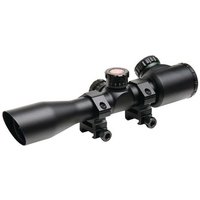
TruGlo Tru-Brite Xtreme Tactical Compact 4x32mm Rifle Scope, Red/Green Illuminated Mil-Dot Reticle, TG-TG8504TL
via OpticsPlanet
$89.39
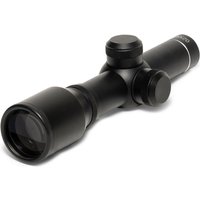
Osprey Global Standard 2.5x20mm LPVO 1in Tube Rifle Scope, Second Focal Plane, Duplex Reticle, Black, SD2.5X20DP
via OpticsPlanet
$89.99

BSA Optics Tactical Weapon Rifle Scope, 4x30mm, Mil-Dot Reticle, w/Rings, AR & SKS Mount Scope, Black Matte, TW4X30
via OpticsPlanet
$94.99
Buying Advice
At the entry end, the TA01 and TA01B models run from around $966.66, both 4x32 with the dual-illumination fiber-optic/tritium system and no battery required. These are the most affordable way into a genuine mil-spec ACOG, trading some of the newer reticle options and features of the TA31 line for a lower price while keeping the same core battery-free durability and waterproofing to 100 meters that defines the whole ACOG family.
The TA31 series is the most common ACOG configuration and sits from around $1,253.09 for the TA31F with a dual-illuminated chevron .223 ballistic reticle, up to around $1,477.84 for the TA31RCO-M4CP with a red chevron reticle — the exact model long associated with US military M4/M16 issue. All TA31 models share 4x32 magnification and a bullet-drop-compensating (BDC) reticle calibrated for 5.56 NATO/.223 Remington, giving practical holdover reference out to several hundred yards without needing a separate ballistic calculation.
For a mid-magnification option, the TA11H-G at 3.5x35 runs around $1,375.92 — a slightly lower magnification and larger objective than the TA31 line, worth considering if you want a marginally wider field of view for closer engagement while retaining more reach than a 1-6x LPVO's top end typically offers at 1x.
The genuinely distinctive option in the range is an ACOG paired with a Trijicon RMR (Ruggedized Miniature Reflex) sight — models like the TA31 with RMR run from around $1,749.63 up to $1,813.65 for the TA31RM04. The RMR mounts forward on the ACOG body, angled for a fast transition: at close range you shoot through the RMR with both eyes open exactly like a standard red dot, and for a longer shot you simply bring the rifle up to your cheek and look through the ACOG's own 4x optic instead. This co-witness setup solves a real limitation of any fixed 4x magnified optic — close-range, both-eyes-open speed — without needing a separate offset red dot mount or giving up any of the ACOG's own capability.
Whether the RMR combo is worth the roughly $500 premium over a standalone TA31 depends entirely on your actual use case. For a dedicated designated-marksman or hunting-style AR-15 rarely used inside 25 yards, a standalone ACOG is the more sensible buy — you are paying for a capability you will not use. For a duty, home-defense or multi-role AR-15 where both very close and moderate-range engagement are genuinely both plausible, the combo's fast-transition capability is a real, field-proven advantage that a fixed 4x optic alone cannot replicate.
All ACOG models are BDC-reticle-specific to a chassis and calibre — the .223/5.56 BDC reticle common on TA31 models will not read accurately on a different cartridge or barrel length without adjustment, so match the reticle designation to your actual rifle and load rather than assuming any ACOG works identically across different AR-15 builds.
Frequently Asked Questions
What is the cheapest Trijicon ACOG model?
The TA01 and TA01B models are the most affordable current ACOGs, running from around $966.66. Both are fixed 4x32 with the same battery-free fiber-optic/tritium illumination and waterproofing as the rest of the ACOG line, at a lower price than the TA31 series.
Does the Trijicon ACOG need batteries?
No — that is the ACOG's defining feature. Illumination comes from a fiber-optic strip that gathers ambient light plus a tritium source for low-light use, so the reticle stays illuminated with no battery to charge, replace or fail. This is also why an ACOG's reticle brightness is not independently adjustable the way an LED reticle's is.
What's the difference between the TA01 and TA31 ACOG?
Both are 4x32 with the same battery-free dual illumination, but the TA31 series generally offers newer reticle options — including BDC reticles calibrated specifically for 5.56 NATO/.223 Remington — and is priced from around $1,253.09, above the TA01's roughly $966.66 starting price.
Is the ACOG with RMR combo worth the extra cost?
It depends on your use case. If your AR-15 is genuinely used across both very close range (where a red dot's both-eyes-open speed matters) and moderate range (where the ACOG's 4x magnification helps), the RMR combo's roughly $500 premium over a standalone TA31 is a real, field-proven advantage. For a rifle rarely used inside 25 yards, a standalone ACOG is the more sensible buy.
How does the RMR combo actually work on an ACOG?
The RMR (Ruggedized Miniature Reflex) mounts forward on the ACOG's body, angled so you can shoot through it with both eyes open for a fast, close-range shot exactly like a standalone red dot. For a longer shot, you bring the rifle up to your cheek as normal and look through the ACOG's own 4x optic — no separate offset mount or optic swap needed.
What reticle does the Trijicon ACOG TA31 use?
TA31 models use a dual-illuminated bullet-drop-compensating (BDC) reticle calibrated for 5.56 NATO/.223 Remington, giving practical holdover reference at various distances without a separate ballistic calculation. Reticle designations vary by specific TA31 model (chevron, crosshair, etc.), so match the reticle to your actual rifle and preferred aiming style.
Is the Trijicon ACOG still relevant compared to modern LPVOs?
Yes, for a specific use case: shooters who want genuine battery-free reliability and decades of proven military durability over the extra flexibility of a variable-power LPVO. An ACOG's fixed 4x magnification is less flexible than a 1-6x or 1-8x LPVO's zoom range, but it never needs a battery and is rated waterproof to 100 meters, which is exactly why it remains in demand for duty and hard-use rifles.
Related guides
Learn how to mount a rifle scope correctly with the right tools, torque specs in inch-pounds, Loctite guidelines, and three proven leveling methods.
Best Optics for Short-Barrel ARs: LPVO vs Prism vs DotFind the best optic for your 10.5"–12.5" AR pistol or SBR. We compare LPVOs, prism sights, and red dots across weight, eye relief…
Mk Machining Scope Cap Warranty: What US Buyers Need to KnowMk Machining scope cap warranty issues explained. Learn how to file claims, find alternatives, and protect your rifle scope investment in 2026.
Barrett MRAD Barrel Swaps: Optics That Hold Zero Every TimeSwapping barrels on your Barrett MRAD? Our 2026 guide covers the best scopes, mounts, and zero-retention strategies so you stay on target across every…
Base Class Optic Rules & MSRP Cap Conflicts: What to BuyConfused by PRS base-class MSRP caps and optic eligibility? Our 2026 US guide breaks down compliant scopes, FFP vs SFP rules…
Scope Rail Help — Choosing the Right Base & MountConfused by Picatinny, Weaver, and dovetail scope rails? Our 2026 US guide explains every rail type, shows you how to match mounts to your rifle…
Not sure which scope is right for you?
Try our AI-powered scope finder — answer a few questions and get personalised recommendations.
Find My Scope →Get a UK scope tip every day
Follow AiScopes on Facebook for daily buying guides, deals and gear advice.
Follow on Facebook