Best Scopes for Glasses Wearers & Astigmatism
Shopping in the US? This page is on our US site: aiscopes.us →
By Peter Makulek · Senior Optics Editor · · Live prices from US retailers
If you wear glasses or have astigmatism, start with scopes offering at least 3.8 inches of eye relief and a forgiving eyebox — the Vortex Viper PST Gen II and Leupold VX-Freedom (both 3.8–4.0 inches of relief) are excellent choices that let you maintain a full field of view even with eyeglass frames sitting between your eye and the ocular lens. For red dots, a prism sight like the Burris AR-332 virtually eliminates the starburst blur astigmatism causes on holographic and reflex sights.
Glasses wearers face a unique compound problem at the shooting bench or in the deer stand: prescription lenses add roughly 10–15mm of distance between the eye and the ocular lens, which eats directly into your usable eye relief. If a scope only provides 3.0 inches of relief — common on many budget models — adding glasses can push you outside the eyebox entirely, causing scope shadow, partial blackout, or worse, a scope-ring laceration from recoil. For American hunters shooting magnum calibers like .300 Win Mag or hard-kicking .338 Lapua, generous eye relief is not a luxury but a safety requirement. A minimum of 3.5 inches is workable; 3.8 to 4.2 inches is the sweet spot for eyeglass compatibility.
Astigmatism introduces a second challenge that specifically affects red-dot and holographic sights. Because astigmatism distorts how your eye focuses a point source of light, the crisp 2-MOA dot in a reflex sight can appear as a starburst, comma, or smeared line. The effect varies by severity and axis of your astigmatism. This is not a defect of the optic — it is a well-documented interaction between emitter-based sights and the irregular curvature of your cornea or lens. Prism sights, which use an etched reticle on glass rather than projecting a dot, largely solve this issue because your eye processes the image the same way it processes any physical object, correctable by your prescription lenses.
Cross-eye dominance — where your dominant eye is opposite your dominant hand — affects an estimated 25–35% of shooters according to various optometric surveys and adds yet another layer of complexity. If you are right-handed but left-eye dominant, your natural point of aim pulls to the wrong side, and you must either train to shoot with your non-dominant hand, use an eye patch or occluder, or select optics that help compensate. Scopes with very wide, forgiving eyeboxes and low magnification settings (like LPVOs at 1x) allow cross-dominant shooters to keep both eyes open, letting the brain's binocular vision sort the image. Throughout this guide we address all three problems — eye relief, astigmatism blur, and cross-eye dominance — with specific product recommendations and practical tips for US shooters across hunting, competition, and home-defense disciplines.
Top Picks — Live US Prices

Bushnell Simmons Pro Hunter 3-9x40mm Riflescope
via Bushnell
$89.95
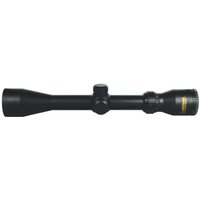
Traditions Muzzleloader Hunter Black Powder 3-9x40mm Circle Reticle A1143 Scope
via OpticsPlanet
$95.99
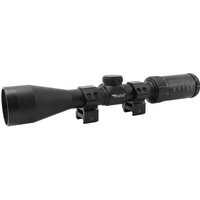
BSA Optics Optix Hunting Rifle Scope, 4-12x40mm, BDC-8 Reticle, Black, HS4-12X40TB
via OpticsPlanet
$99.49
Buying Advice
The two specs that matter most for glasses wearers are eye relief and eyebox diameter. Eye relief is the distance from the rear lens surface at which you see the full field of view — it is a fixed measurement for a given magnification setting, typically listed in the manufacturer's spec sheet. Eyebox is the three-dimensional zone of tolerance around that eye-relief point: a 'forgiving' eyebox means you can shift your head position slightly and still maintain a full image without scope shadow. Higher-quality glass and multi-element ocular designs tend to produce wider eyeboxes. When shopping, look for eye relief of at least 3.8 inches (some Leupold hunting scopes reach 4.9 inches at low power) and, if possible, try the scope in person at a dealer — aiscopes.us has a 50-state dealer locator that can help you find a local shop.
Budget tiers break down predictably. In the $150–$300 entry tier, the Vortex Crossfire II line and Bushnell Banner 2 offer 3.5–3.9 inches of eye relief, decent glass clarity, and lifetime warranties — solid choices for rimfire, AR-15 plinking, or youth rifles. The $300–$700 mid tier is where glasses-friendly features get serious: the Leupold VX-3HD, Vortex Viper PST Gen II, and Burris Veracity deliver 3.8–4.2 inches of relief, excellent edge-to-edge clarity, and tighter manufacturing tolerances that produce more consistent eyeboxes. Premium options above $800 — Nightforce NX8, March FX series, Leupold Mark 5HD — offer the widest eyeboxes, apochromatic glass that minimizes chromatic aberration for prescription-lens wearers, and rock-solid tracking for PRS and long-range hunting out to 1,000 yards and beyond.
The most common mistake glasses-wearing buyers make is assuming that all long-eye-relief scopes are equally forgiving. A scout scope mounted forward on the barrel may give 9+ inches of relief, but many scout scopes have a narrow eyebox that demands precise, repeatable head placement — the opposite of what a glasses wearer needs. Similarly, some shooters buy a red dot to 'simplify' their optics setup and then discover that their astigmatism turns every dot into a blurry starburst. Before purchasing a reflex or holographic sight, test your astigmatism response: look through a friend's red dot, or visit a retailer. If you see distortion, a prism sight (Burris AR-332, Vortex Spitfire HD Gen II, Primary Arms SLx MicroPrism) with an etched reticle is the proven fix.
US-specific context matters here. Most whitetail hunters take deer inside 150 yards from a stand, so a 3-9x40 or 2-10x42 with generous eye relief is more than enough — there is no need for a heavy, expensive long-range rig. For western elk or mule deer hunts where 300–500 yard shots are realistic, a 4-16x44 or 5-25x56 with 3.8+ inches of eye relief at top magnification is the right tool. AR-15 shooters running red dots for home defense or 3-gun competition should evaluate prism sights early if astigmatism is a factor; the etched reticle remains visible even if the battery dies, an added reliability benefit. You can find most recommended optics on Amazon.com (our site uses the aiscopeus-20 Associates tag) or through OpticsPlanet, which often stocks harder-to-find Nightforce and March models.
Matching the optic to your specific combination of vision issues is the final step. If you only wear glasses (no astigmatism), prioritize eye relief and eyebox width in a magnified scope — the Leupold VX-Freedom 3-9x40 at around $200 is a best-in-class value with 4.2 inches of relief. If you have astigmatism but do not wear glasses, a prism sight for close-range work or a high-quality magnified scope (which focuses through the objective, not your corneal curvature) for distance shooting will both perform well. If you deal with cross-eye dominance on top of glasses, consider an LPVO set to 1x with both eyes open: the Vortex Strike Eagle 1-6x24 has a wide eyebox at 1x and 3.5 inches of relief, letting your brain reconcile the dominant-eye image naturally. For extreme cases, an optometrist can prescribe shooting glasses with a frosted lens or Bangerter filter over the dominant eye to force the non-dominant eye to take over at the scope.
The brand landscape in 2026 heavily favors a few manufacturers for glasses-friendly optics. Leupold has long led the eye-relief race — their proprietary Twilight Max Light Management System also reduces chromatic fringing that prescription-lens wearers notice more acutely. Vortex's unconditional lifetime VIP warranty makes their mid-tier Viper and Diamondback lines low-risk purchases: if you buy and discover the eyebox does not work for your face geometry, they will help you. Nightforce and March dominate the premium long-range segment with the widest, most forgiving eyeboxes at high magnification, and Burris holds the prism-sight market with the AR-332 and RT-series. Bushnell's refreshed Engage and Nitro lines deserve a look at the mid tier, offering competitive relief specs and excellent value for the dollar.
Frequently Asked Questions
How much eye relief do I need if I wear glasses while shooting?
Most eyeglass frames add 10–15mm of distance between your eye and the scope's ocular lens. To compensate, look for scopes with at least 3.8 inches of eye relief; 4.0–4.2 inches is ideal. Below 3.5 inches, you will likely experience partial blackout or scope shadow, especially at higher magnification settings. Leupold and Vortex both publish eye relief per magnification in their spec sheets — always check the number at the highest magnification, since that is where relief is shortest.
Why does my red dot look like a starburst or smeared line?
This is almost certainly caused by astigmatism in your eye, not a defect in the sight. Reflex and holographic sights project a point-source LED or laser dot that your astigmatic cornea distorts into a starburst, comma, or irregular shape. The fix is to switch to a prism sight (like the Burris AR-332 or Vortex Spitfire HD Gen II) that uses a physically etched reticle on glass, which your prescription lenses can correct normally. Adjusting brightness to the lowest usable setting can also reduce perceived blur on reflex sights.
What is the difference between eye relief and eyebox?
Eye relief is the specific distance from the rear lens at which you see the full field of view — it is a single number (e.g., 3.9 inches). Eyebox is the three-dimensional tolerance zone around that point: how far you can deviate up, down, left, right, or forward/backward and still maintain a complete image. A scope with 3.9 inches of eye relief and a wide, forgiving eyebox is far more practical for a glasses wearer than one with the same relief but a tight, unforgiving eyebox that demands perfect head placement.
Can I use a magnified scope instead of a red dot to avoid astigmatism blur?
Yes. Magnified scopes focus the image through the objective lens system and present it to your eye as a focused image at the eyepiece, so your astigmatism has far less effect on the reticle and target image. Many shooters with astigmatism find that even a low-powered variable optic at 1x (like an LPVO) produces a much cleaner reticle image than a reflex dot. This is one of the main reasons prism sights and LPVOs have gained popularity among astigmatic shooters.
I am cross-eye dominant — should I switch shooting hands or use an optic workaround?
Both approaches work, but using optics strategically is often easier. An LPVO at 1x or a red dot/prism sight used with both eyes open allows your brain to blend images from both eyes and naturally resolve dominance issues. If cross-dominance is severe, an optometrist can prescribe shooting glasses with a partial occluder (Bangerter foil) or frosted patch over your dominant eye's lens. Switching hands is the most reliable permanent fix but requires significant retraining of muscle memory and may not suit every shooter's comfort or safety.
Are scout scopes a good option for glasses wearers?
Scout scopes offer extreme eye relief (often 9–11 inches) because they mount forward of the action, which may seem ideal for glasses wearers. However, many scout scopes have relatively narrow eyeboxes, meaning your head position must be very precise. They also limit you to low magnification (typically 2-7x), which is fine for brush hunting or fast target acquisition inside 200 yards but insufficient for longer-range western hunting. If you primarily hunt whitetail in the East at close range, a scout scope can work, but a standard scope with 4+ inches of eye relief and a forgiving eyebox is more versatile.
Do adjustable diopter rings on scopes help with astigmatism?
The diopter adjustment ring on a scope's ocular bell focuses the reticle for your specific eye and can partially compensate for minor vision issues, including mild astigmatism. However, it corrects in a single axis and cannot fully replace prescription correction for moderate or severe astigmatism. Always adjust the diopter first by pointing the scope at a plain, bright background (like the sky) and turning the ring until the reticle is perfectly sharp before mounting and zeroing. For best results, wear your prescription glasses while setting the diopter.
Does higher magnification make astigmatism worse when looking through a scope?
Not significantly, because the scope's lens system is doing the focusing work. Astigmatism primarily affects point-source emitters like red dots and holographic sights, not magnified optics. You may notice slightly softer edges at very high magnification if your astigmatism is severe and you are not wearing corrective lenses, but this effect is minor compared to the starburst distortion seen with reflex sights. Wearing your glasses and properly adjusting the diopter ring virtually eliminates the issue at any magnification.
What is the best budget scope for a glasses wearer hunting whitetail in the US?
The Leupold VX-Freedom 3-9x40 is arguably the best budget option, offering 4.2 inches of eye relief, a generous eyebox, excellent clarity for its price tier, and Leupold's lifetime guarantee. The Vortex Crossfire II 3-9x40 is a close second with 3.8 inches of eye relief and Vortex's unconditional VIP lifetime warranty. Both are available on Amazon.com and are ideal for typical eastern US whitetail hunting inside 200 yards from a stand or blind.
Related guides
First-time hunter torn between two rifle scopes? Our 2026 guide breaks down magnification, reticle type, glass quality…
Best Scopes for the Tikka T3x (Lite, Varmint & CTR)Find the best scopes for every Tikka T3x variant—Lite, Varmint, and CTR. We cover mounting quirks, ring heights, rail gaps…
Rifle vs. Scope: Where to Put Your Money for Long RangeLearn exactly how to divide a $1,000–$1,500 budget between your rifle and scope for long-range shooting.
Not sure which scope is right for you?
Try our AI-powered scope finder — answer a few questions and get personalised recommendations.
Find My Scope →Get a UK scope tip every day
Follow AiScopes on Facebook for daily buying guides, deals and gear advice.
Follow on Facebook