Best Rimfire Scopes for Foxing in the UK (2026)
By Peter Makulek · Senior Optics Editor · · Live prices from UK retailers
Foxing with a .22LR is a distinctly UK discipline. Where centrefire rifles are the norm for longer-range fox control, many UK shooters—particularly those on smallholdings, liveries or permission close to dwellings—rely on a rimfire for its lower noise, reduced ricochet risk and shorter danger area. The trade-off, of course, is range: with a .22LR you are typically limited to shots inside 80 yards, often much closer, which places unique demands on your optic. The best scope for fox shooting with a rimfire is not simply a scaled-down centrefire scope; it needs the right magnification, the right reticle and, crucially, the parallax set-up to deliver precision at short to moderate distances.
Foxes in the UK are overwhelmingly shot in low light—at dusk, at dawn or under a lamp. That reality shapes every buying decision. An illuminated reticle, good light transmission and compatibility with lamp or night-vision clip-on systems are not luxuries; they are core requirements for most rimfire fox shooters. Choosing an optic purely on daylight clarity and ignoring twilight performance is one of the most common mistakes we see, and it can render an otherwise excellent scope almost useless for the job at hand.
Budget is always a factor, and in 2026 the UK market offers genuine quality at every price point. You can find a perfectly capable rimfire scope for foxing under £200, while spending more buys refinements like locking turrets, superior edge-to-edge sharpness and better coatings for those critical last minutes of legal shooting light. At the top end, dedicated night-vision scopes and digital clip-on units from brands like Pard have matured significantly, bringing true night capability to rimfire setups without the enormous outlay that once required.
This guide is written specifically for UK shooters choosing a scope for a .22LR fox rifle. We cover magnification, reticle type, objective lens size, parallax, night-vision compatibility, legal considerations and budget tiers. Whether you are lamping on a Midlands farm or calling foxes at dawn on a Welsh hill, the aim is to help you pick the right glass for the job and avoid the pitfalls that waste money.
Top Picks — Live UK Prices

Bsa Genesys Hunter 2.5-10x50 Ir Scope
via Sportsman Gun Centre
£253.99

Vector Continental X6 1.5-9x42 German No4 Hunting Reticle Rifle Scope
via Optics Warehouse
£269.99
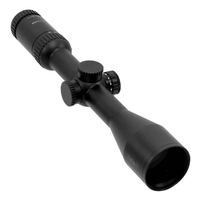
OptiMate Hunter 2-12x50 WA IR Rifle Scope
via Uttings
£279.99
Buying Advice
Start with the key specifications. Magnification range matters more than peak power: a 3-12× or 4-16× scope covers every realistic .22LR foxing scenario, giving you a wide field of view for scanning hedgerows at the low end and enough detail to place a precise head shot at 60–80 yards at the top. Objective lens diameter directly affects light gathering—a 44 mm or 50 mm objective is ideal for low-light work, though a larger objective means higher mounting, which can affect cheek weld. Parallax adjustment is critical on a rimfire scope; most centrefire scopes have parallax factory-set at 100 yards or more, but for .22LR foxing you need an adjustable parallax (AO or side-focus) that goes down to at least 25 yards, otherwise you will see parallax-induced point-of-impact shift at close range.
Budget tiers in the UK break down roughly as follows. Under £200, you can find solid scopes from brands such as Hawke, MTC and Nikko Stirling that offer illuminated reticles, adjustable parallax and fully multi-coated lenses—perfectly adequate for lamped foxing and dawn/dusk outings. Between £200 and £500, expect better glass clarity, more consistent turret tracking (important if you dial for drop rather than use holdover), locking turrets and improved twilight performance from higher-end coatings. Above £500, you enter territory occupied by premium European and Japanese glass, plus dedicated digital night-vision scopes like the Pard DS35 series, which combine thermal detection with a ballistic reticle and recording capability—a genuine game-changer for serious night foxing.
Common mistakes to avoid: buying a fixed-parallax scope set at 100 yards and wondering why groups open up at 30–50 yards; choosing an excessively high magnification (20× or more) that narrows your field of view and exaggerates mirage and wobble at short range; and overlooking eye relief—a scope with less than 75 mm of eye relief can be uncomfortable on a rimfire, though the .22LR's negligible recoil makes this less dangerous than on a centrefire. Another frequent error is assuming any scope labelled as a rimfire scope is automatically parallax-adjusted for short range; always check the specification rather than trusting the marketing.
UK-specific context is important. There is no legal restriction on magnification or scope type for rimfire rifles held on a firearms certificate, but if you intend to use a night-vision scope or clip-on device you should ensure your FAC conditions permit night shooting and that you have the landowner's written permission. Thermal and image-intensifying devices are legal to own and use for foxing in England and Wales without additional licensing, though Scotland has separate considerations under the Wildlife and Countryside Act. Purchase from established UK retailers—Uttings, Sporting Saint, John Rothery, Optics Warehouse and others—to ensure proper warranty support and correct duty/VAT payment on imported optics.
Matching the scope to your specific use case is the final step. If you primarily lamp foxes from a vehicle or high seat inside 60 yards, a 3-9×40 or 3-12×44 with an illuminated reticle and AO parallax is all you need—keep it simple and light. If you call foxes at dawn and dusk and want maximum low-light performance without going digital, invest in a 4-16×50 with premium multi-coated lenses and a German-style #4 or mil-dot reticle with a fine illuminated centre. If you are a dedicated night operator, a Pard digital night-vision scope or clip-on unit paired with an IR lamp will outperform any conventional scope once true darkness falls. Consider weight and balance too: a heavy 56 mm objective on a lightweight rimfire can make the rifle feel nose-heavy and unwieldy on a long walk-and-stalk.
The brand landscape in the UK has shifted in recent years. Hawke and MTC remain dominant in the mid-range, offering excellent value and local warranty support. Nikko Stirling provides strong budget options. At the premium end, Vortex, Leupold and Zeiss all have models suited to rimfire foxing, though availability and pricing vary. For night-vision, Pard has established itself as the go-to brand for UK foxers, offering a range of digital scopes and clip-on units at prices that would have been unthinkable five years ago. Whatever you choose, buy from a retailer who understands shooting optics and can advise on mounting, zeroing and warranty—a good dealer relationship is worth more than saving a few pounds online.
Frequently Asked Questions
What magnification range works best for foxing with a .22LR at typical UK distances?
For most UK .22LR foxing, shots are taken inside 80 yards, so a scope in the 3-12× or 4-16× range is ideal. The lower end gives you a wide field of view for target acquisition in poor light, while the upper end provides enough detail for precise shot placement at moderate range. Anything above 16× is generally unnecessary and can reduce field of view and image stability.
Do you need a night-vision-compatible scope for lamping foxes with a rimfire?
Not necessarily. A conventional scope with an illuminated reticle and good light transmission works well with a lamp or filtered torch. However, if you shoot in near-total darkness or want to dispense with a lamp entirely, a dedicated digital night-vision scope or a clip-on NV unit (such as those from Pard) is a significant advantage. Ensure your FAC conditions and permissions cover night shooting before investing.
Can you use a standard rimfire scope for fox shooting or do you need a centrefire-rated optic?
A rimfire scope is perfectly suitable for fox shooting with a .22LR. The recoil of a .22LR is negligible, so you do not need the heavier construction of a centrefire-rated optic. The key advantage of a purpose-built rimfire scope is that its parallax is typically adjustable down to 10–25 yards, which is essential for short-range accuracy. A centrefire scope with parallax fixed at 100 yards will show noticeable parallax error at typical rimfire distances.
What are the best budget fox-shooting scopes under £200 for a .22LR in the UK?
Under £200, look at models from Hawke (Vantage and Airmax series), MTC Optics (Mamba and Viper Connect ranges) and Nikko Stirling. At this price you can expect fully multi-coated lenses, adjustable parallax, an illuminated reticle and reliable turret tracking. These scopes will handle lamped and dawn/dusk foxing very capably, and many UK shooters use them season after season without feeling the need to upgrade.
Is an illuminated reticle worth it for foxing at dawn and dusk?
Yes, for most foxers it is one of the most valuable features a scope can have. An illuminated centre dot or crosshair remains visible against dark backgrounds and in failing light when a black reticle would disappear. Choose a scope with adjustable brightness so you can dial it down to avoid flare in moderate light. Red illumination is the most common and works well for most UK conditions.
What reticle style is best for a .22LR fox scope?
A mil-dot or BDC (bullet drop compensator) reticle with an illuminated centre offers the best versatility. Mil-dots let you estimate range and hold over for drop without adjusting turrets—useful when a fox appears unexpectedly at a different distance. A simple duplex or German #4 reticle with a fine illuminated centre is also excellent if you prefer a clean sight picture and plan to zero at a single distance, typically 50 yards.
Does objective lens size really matter for foxing in low light?
It does, but it is not the only factor. A larger objective (44–50 mm) gathers more light, producing a brighter image in twilight. However, coating quality often matters more than raw diameter: a well-coated 44 mm lens can outperform a poorly coated 50 mm lens in low light. Also consider that a larger objective requires higher mounts, which can affect your cheek weld and shooting comfort on a lightweight rimfire.
Is a budget night vision scope a viable option for .22LR foxing in the UK?
Budget night vision has improved dramatically. Digital night-vision scopes and clip-on units from Pard and similar manufacturers now offer usable image quality at prices starting from a few hundred pounds. They are more than adequate for identifying and shooting foxes at rimfire distances. Be aware that cheaper units may have lower resolution and shorter battery life than premium models, so read reviews carefully and buy from a UK dealer who can support warranty claims.
What scope mounting considerations are specific to rimfire fox rifles?
Many .22LR rifles use 3/8-inch dovetail rails rather than Picatinny or Weaver mounts, so ensure your rings match the rail type or use adapter bases. Keep the scope mounted as low as possible for a natural cheek weld—rimfire rifles tend to have slimmer stocks than centrefires. Torque ring screws evenly and to the manufacturer's specification to avoid warping the tube. If you plan to add a night-vision clip-on, check that your rail has enough length to accommodate both the day scope and the NV unit.
Related guides
Discover the best scope for rabbit shooting in the UK for 2026. Expert advice on magnification, parallax, reticles and budget picks for airgun pest control.
Best Scopes for Foxing and Vermin Control at NightExpert UK guide to the best scopes for fox shooting and night vermin control in 2026. Covers night vision, thermal, Pard add-ons, budget picks, and legal advice for UK shooters.
Best Scopes for Fox Shooting UK 2026The best scopes for fox shooting and night pest control in the UK — covering NV, thermal, and low-light optics from Pulsar, Pard, ATN, and more.
Best Scopes for Deer Stalking Under £300 in 2026Our 2026 UK buyer's guide to the best scopes for deer stalking under £300. Expert advice on magnification, low-light performance, reticles, and top budget picks for woodland and hill.
Best .22LR Long-Range Scopes for UK Shooters in 2026Our UK expert guide to the best scopes for .22LR long-range shooting beyond 100 yards in 2026. FFP vs SFP, MOA vs MRAD, reticles, budget tiers and top picks reviewed.
Not sure which scope is right for you?
Try our AI-powered scope finder — answer a few questions and get personalised recommendations.
Find My Scope →Get a UK scope tip every day
Follow AiScopes on Facebook for daily buying guides, deals and gear advice.
Follow on Facebook