Best Scopes for .30-30 Lever Actions in 2026
By Peter Makulek · Senior Optics Editor · · Live prices from UK retailers
Choosing the best scope for 30-30 lever actions means respecting what the cartridge actually does well — and what it doesn't. The .30-30 Winchester is a short-to-moderate range deer cartridge with a pronounced rainbow trajectory beyond about 150 to 200 yards, and the vast majority of whitetail taken with it fall well inside 150 yards from a treestand, blind, or still-hunting scenario in thick timber. That ballistic reality should drive every optics decision you make: you don't need 16x magnification or a 56mm objective, and you definitely don't need a $2,000 long-range turret system. What you need is a compact, lightweight scope with generous eye relief, a forgiving eye box, and low magnification that lets you get on target fast in fading light at woods distances.
The three dominant US lever-action platforms in .30-30 — the Marlin 336 (now produced under the Ruger-owned Marlin banner), the Henry side-gate models, and the Winchester Model 94 — each present slightly different mounting considerations. The Marlin 336 and most Henry .30-30 rifles eject spent cases from the side of the receiver, which means a conventional scope can be mounted directly on top in the normal position using standard rings and bases. The Winchester 94, however, has a more complicated story: pre-1982 and many subsequent traditional Model 94s eject cases straight up through the top of the receiver, making a conventional scope mount physically impossible without blocking ejection. Later angle-eject 94 variants do accept a standard top-mount scope. This distinction is the single most important thing to get right before you spend a dollar on glass.
For US hunters shopping in 2026, the ideal .30-30 scope generally falls into the 1-4x, 2-7x, or fixed 4x category. These magnification ranges match the cartridge's effective envelope perfectly. A 2-7x variable gives you a wide field of view at 2x for close brush encounters and enough reach at 7x for a 150-yard shot across a food plot — which is about as far as most hunters should be stretching a .30-30 anyway. Fixed 4x scopes remain a compelling choice for their simplicity, lighter weight, and typically lower price point. Either way, a 32mm or 33mm objective lens is more than sufficient; you gain nothing practical from a 50mm bell on this platform except added weight, a higher cheek weld, and a scope that looks absurd on a trim lever gun.
Price expectations for a quality .30-30 scope are refreshingly modest compared to the long-range precision market. Excellent options exist in the $100 to $300 range, with diminishing practical returns above that for a woods-range lever-action setup. Leupold, Vortex, and Burris dominate this segment in the US market, with all three brands widely available on Amazon.com and OpticsPlanet. Throughout this guide, we focus on what genuinely matters for .30-30 lever-gun hunters: fast target acquisition, durability under recoil, appropriate magnification, compact dimensions that complement the rifle's handling, and — critically — compatibility with your specific rifle's ejection pattern and mounting system.
Top Picks — Live UK Prices
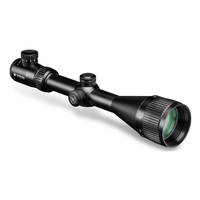
Vortex Crossfire II 3-12x56 AO Hog Hunter Riflescope
via Uttings
£279.00
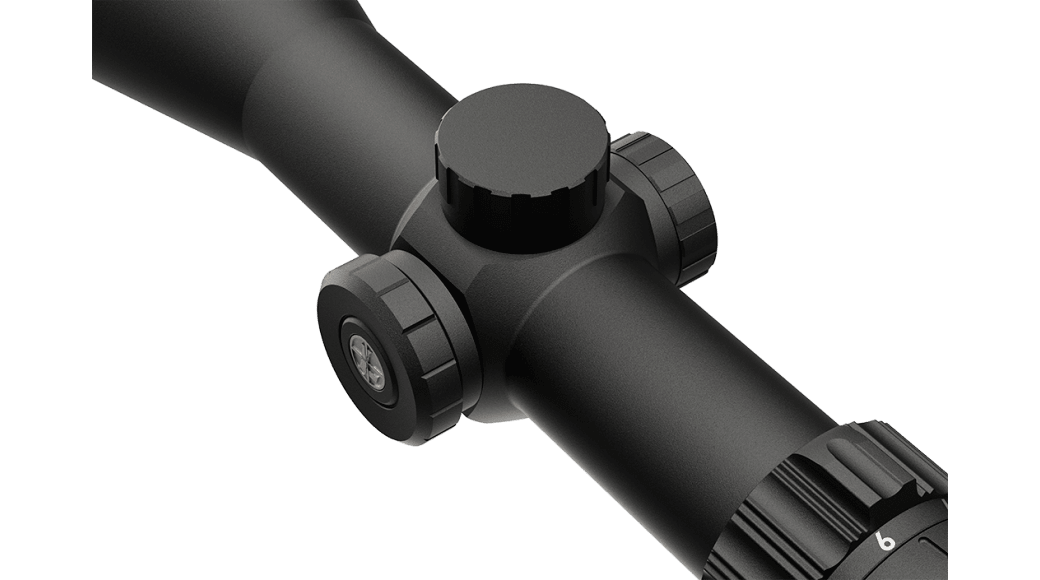
Leupold VX-Freedom 3-9x50 IR Scope- Illuminated Twilight Hunter Reticle
via Livens
£789.00

Bsa Genesys Hunter 2.5-10x50 Ir Scope
via Sportsman Gun Centre
£253.99
Buying Advice
For the best overall scope on a .30-30 lever gun, a quality 2-7x variable in the $200 to $350 range is extremely hard to beat. The Leupold VX-Freedom 2-7x33 and the Vortex Diamondback 2-7x35 are both perennial favorites in this category, and for good reason: they offer genuinely useful magnification ranges, compact profiles that balance well on a lever action, and optical quality that exceeds what most hunters will ever demand at woods distances. A 2-7x scope lets you run at 2x or 3x for still-hunting in dense cover, then dial to 7x for a deliberate shot at a deer standing 150 yards across a creek bottom. Look for a simple duplex reticle — there is no practical benefit to a complex BDC or mil-dot reticle on a cartridge you shouldn't be lobbing past 200 yards. Either MOA or MRAD adjustments work fine here since you'll be zeroing and largely leaving the turrets alone. Both Leupold and Vortex offer excellent lifetime warranties in the US market, which matters on a rifle you'll hand down.
For the best budget scope under $150, several proven options exist that won't compromise reliability or durability. The Vortex Crossfire II 2-7x32 consistently falls in the $120 to $150 range and offers Vortex's unconditional lifetime VIP warranty — a genuine differentiator at this price point. The Burris Fullfield II 2-7x35 is another strong contender that often dips below $150 on sale. At this tier, you're giving up some edge-to-edge sharpness, coating sophistication, and perhaps a touch of low-light transmission compared to $300 glass, but for a deer standing broadside at 80 yards in shooting light, these scopes are more than adequate. Don't waste money at this price on features you don't need: illuminated reticles, side-focus parallax knobs, and exposed target turrets are solutions to problems a .30-30 lever gun doesn't have. Stick with a simple duplex, capped turrets, and a fixed parallax set at 100 or 150 yards — which is exactly what most budget 2-7x scopes deliver.
For the best scout-scope setup for forward mounting, the category exists primarily because of top-eject Winchester 94 rifles, though some hunters also prefer the forward-mounted configuration on Marlin and Henry rifles for faster both-eyes-open shooting and unobstructed loading. A scout scope sits on the barrel or forward receiver ring, demanding long eye relief — typically 9 to 11 inches or more. The Leupold VX-Freedom 1.5-4x28 IER (Intermediate Eye Relief) is purpose-built for this role and remains one of the most popular choices among US lever-action shooters, usually falling in the $250 to $350 band. Burris also offers a well-regarded 2-7x32 Scout scope in a similar price range. When mounting a scout scope on a top-eject Model 94, you'll need a barrel-mounted or front-receiver rail; several aftermarket options exist from XS Sights and others, but availability and compatibility vary — verify fitment for your specific rifle's year and variant before purchasing. The optical trade-off with any scout scope is a smaller field of view at the eye and a less magnified image compared to a conventional scope at the same power, but for a .30-30 used inside 150 yards, that trade-off is entirely acceptable.
For the best low-power option for thick timber hunting, fixed 4x scopes and true 1-4x or 1-5x variables deserve serious consideration. A fixed 4x — such as the Leupold FX-II Ultralight 4x28 — offers remarkable simplicity: nothing to adjust, nothing to bump out of position, and typically a lighter, more compact package than any variable. For hunters who want more versatility, a 1-4x variable like the Vortex Crossfire II 1-4x24 provides a near-1x setting that mimics a red dot's speed with both-eyes-open shooting, plus 4x for slightly longer shots. In the dense hardwoods and cedar thickets where .30-30 lever guns truly shine — much of the whitetail habitat across the upper Midwest, Appalachian states, and East Texas — the average shot opportunity appears and disappears in seconds at distances well under 100 yards. A wide field of view and a bright, uncluttered reticle matter far more than magnification in that scenario. If the scope you're considering goes above 7x, you're almost certainly over-scoping the rifle for its actual use case.
Understanding side-eject versus top-eject rifles is not optional — it is the single most consequential compatibility question when scoping a .30-30 lever action. The Marlin 336, Henry .30-30 rifles, and angle-eject Winchester 94 variants all eject spent cases from the side of the receiver, leaving the top of the action clear for a conventional scope mounted in standard rings on a Weaver or Picatinny base. These rifles accept any appropriately sized scope without modification or special mounts. Classic top-eject Winchester Model 94 rifles — which includes the vast majority of pre-1982 production and many post-1982 models that retained the traditional design — eject cases straight up and out the top of the receiver. Mounting a conventional scope directly on top physically blocks this ejection path, causing malfunctions. For these rifles, your options are a forward-mounted scout scope (clearing the ejection port entirely), a specialty offset or side mount that positions the scope to one side, or simply using iron sights. If you own a Model 94 and aren't sure whether it's a top-eject or angle-eject variant, check the ejection port with the action open: if the port faces straight up, you have a top-eject rifle; if it angles to the right, you have an angle-eject model that will accept a conventional top-mount scope. Getting this wrong means buying a scope and mount you cannot use.
Frequently Asked Questions
What magnification do I need on a .30-30 lever action?
For the vast majority of .30-30 hunting scenarios, a 2-7x variable or a fixed 4x scope is ideal. The .30-30 is realistically a sub-200-yard cartridge, and most deer taken with it fall well inside 150 yards — often under 100 in thick timber. A 2-7x gives you low-end width for fast shots in brush and enough top-end magnification for the occasional longer opportunity. Going above 7x or 9x on a .30-30 lever gun adds weight and bulk with virtually no practical benefit.
Can I mount a normal scope on a Winchester 94?
It depends entirely on which variant you have. Classic top-eject Winchester 94 rifles eject spent brass straight up through the top of the receiver, which means a conventionally mounted scope would block ejection and cause malfunctions. These top-eject models require either a forward-mounted scout scope, an offset/side mount, or iron sights. However, later angle-eject Model 94 variants redirect ejection to the right side of the receiver, leaving the top clear for a standard scope in conventional rings and bases. Check your rifle's ejection port orientation before buying any optic.
Is a scout scope better than a conventional scope on a Marlin 336?
For most hunters, a conventional scope is the better choice on a Marlin 336 because the rifle ejects from the side and accepts a standard top-mount scope without any issues. A conventional scope offers a larger apparent field of view, a brighter image, and more magnification options than a scout scope at comparable price points. That said, some hunters genuinely prefer the scout configuration for its both-eyes-open situational awareness and completely unobstructed loading port. It's a valid personal preference, but it's not a necessity on the 336 the way it can be on a top-eject Winchester 94.
What is the effective range of a .30-30 with a scope?
Adding a scope to a .30-30 improves your ability to place shots precisely, but it doesn't change the cartridge's ballistic limitations. A typical 150-grain or 170-grain .30-30 load drops significantly past 150 yards, with trajectory becoming quite steep — roughly 10 to 14 inches of drop at 250 yards depending on the load. Most experienced .30-30 shooters consider 200 yards a practical maximum for ethical deer hunting, with the majority of shots taken inside 150 yards. A scope helps you use every yard of that effective range confidently, but it won't turn the .30-30 into a 400-yard cartridge.
Will a scope get in the way of loading a lever action?
On side-eject rifles like the Marlin 336 and Henry side-gate models, a properly mounted conventional scope does not interfere with loading through the loading gate or the tubular magazine. On top-eject Winchester 94 rifles, a conventionally mounted scope would block both ejection and top loading, which is exactly why those rifles need a scout scope or alternative mount solution. Even with a scout scope, loading remains unobstructed because the optic sits forward of the receiver. In practice, scope interference with loading is a non-issue as long as you've matched the correct mount type to your specific rifle's ejection pattern.
Do I need an illuminated reticle on a .30-30 scope?
An illuminated reticle can be helpful during the last few minutes of legal shooting light, which is prime time for whitetail movement in many US states. However, it's far from essential on a .30-30 lever-action scope and adds cost. A standard duplex reticle with reasonably thick crosshair posts is visible against dark backgrounds in low light without illumination. If your budget is tight, spend the money on better glass quality rather than an illuminated reticle — superior lens coatings will do more for low-light performance than a lit dot on a mediocre optic.
What rings and bases do I need for a Marlin 336 scope?
The Marlin 336 uses a solid-top receiver that is factory-drilled and tapped for scope bases. You'll need a two-piece Weaver-style base set or a one-piece Picatinny rail designed for the Marlin 336, paired with appropriately sized rings (typically low or medium height for a 32-33mm objective lens). Leupold, Weaver, and several other manufacturers offer direct-fit bases. Low rings are generally preferable to keep the scope as close to the bore axis as possible, which improves cheek weld and reduces the height-over-bore offset. Check ring diameter to match your scope's main tube — most hunting scopes in this class use a 1-inch tube, though some use 30mm.
Is a red dot sight a good alternative to a scope on a .30-30?
A red dot can work well on a .30-30 lever action for shots inside 100 yards, offering very fast target acquisition and unlimited eye relief. However, a red dot provides no magnification, which limits your ability to positively identify and precisely place shots on game at the outer end of the .30-30's effective range. For a hunter who exclusively takes shots under 75 yards in dense cover, a quality red dot is a legitimate option. For most .30-30 hunters who want versatility across the cartridge's full practical range, a low-power variable scope like a 2-7x remains the more capable and popular choice.
Should I use FFP or SFP on a .30-30 hunting scope?
For a .30-30 lever-action hunting scope, a second focal plane (SFP) reticle is the standard and most practical choice. At the low magnification ranges used on these rifles — typically 2-7x or 1-4x — the difference between FFP and SFP is minimal, and SFP scopes maintain a consistent, visible reticle size regardless of magnification setting. FFP reticles are primarily beneficial when using holdover or ranging marks at varying magnifications, which is a long-range precision shooting concern that doesn't apply to .30-30 hunting. Most quality hunting scopes in this magnification range are SFP, and there's no practical reason to seek out an FFP alternative for this application.
Related guides
Choosing a day scope that works perfectly with a Pard NV007SP or Sytong HT-66 rear add-on? Our UK guide covers eyepiece fit, eye relief…
Long-Range Hunting Scopes: UK Buyer's Guide 2026Expert UK guide to choosing a rifle scope for long-range hunting builds. Covers magnification, reticles, turrets, budget tiers in GBP…
Tract Tekoa HD & Top Hunting Scope Recommendations for UK StalkersReal-world feedback on the Tract Tekoa HD plus expert hunting scope recommendations for UK deer stalking.
Goyojo GS515 Night Vision Scope: Is It Any Good for Rats?Is the Goyojo GS515 night vision scope worth it for UK ratting? Our 2026 buying guide covers specs, alternatives, legal context…
Not sure which scope is right for you?
Try our AI-powered scope finder — answer a few questions and get personalised recommendations.
Find My Scope →Get a UK scope tip every day
Follow AiScopes on Facebook for daily buying guides, deals and gear advice.
Follow on Facebook